Fixing up the house

How to fix up or repair your house
Subscribe

So, How About That Bathroom cont. #4

January 28, 2010 By: Glenn Gehrke Category: Bathroom Remodeling

I got very busy the last couple months and haven’t had much time for posting here. But I am back now and here we go. The last thing we were on was the taping of the drywall in the bathroom. If you have already done taping in the past you have a good idea of the basics for doing a good job.

The desired result you are looking for is not being able to see where the taping joints are and a smooth wall. The wall can be textured any way you prefer or it can be left smooth. Smooth wall finish is the most work of all the ways to finish. First thing is to get all of the tools you will need together. Also you are going to need taping compound, enough drywall tape to cover the seams in the whole room, corner metal for any outside corners and some method of getting up to the ceiling and high seams (ladder, bench or plank across buckets). You will also need a few different taping knives, such as a 4″, 6″, 8″, 10″ and a 12″ should be enough for the job. Also a inside corner knife would make the corner taping easier. A mud tray for holding the joint compound, sanding pole and strips of sand paper that are made to fit it. 100 grit paper for the rough sanding and then the 150 grit for the finish sanding.

Now you should be ready to go. Make sure there is nothing in the room that doesn’t need to be there so you are free to move around without having to look for obstacles on every step. Using the 4″ knife you will scoop a portion of mud (joint compound) and you spread a thin layer on each side of the seam you are going to cover. The mud goes on the wall first and then the tape is placed over it. Then you take the 4″ knife and pressing firmly on top of the tape you drag the knife across the tape to push the excess mud from underneath the tape, this is called “wiping”. If you use too much mud it will fall out and splatter on the floor as you go. So try to be a bit sparing as you go to avoid a huge mess but you also have to make sure there are no air pockets under the tape. Play around with the amount you put on to see what works best for you. This is where a second person can be of help. You place the mud and tape and they help you hold up the tape for long lengths. When you are doing an inside corner you will use the corner knife to wipe the mud from the taped seam and this will give you a nice clean corner. When you are wiping the tape it is a good idea to carry the mud tray so you can put the excess mud in it as you go. Wipe a foot or two and then clean the knife on the edge of the tray so the mud goes back in the tray.

Any mud you put on the seams needs to be wiped down before you take any breaks. If it hardens in lumps on the wall it is more work than you want to get it off. Likewise with the mud tray. If you are going to take a break then take a wet rag and lay it over the mud tray and scrape the knife off so it is clean. Then take your break. After you have taped every seam in the room and wiped every seam so there is no excess mud on the walls and ceiling it is time to let it dry completely.

What I have found over the years is best for me is to make sure I have no large amounts of mud left on any part of the job. This will pay off in the end as you will have far less sanding to do. I really dislike too much sanding.

Now when the first layer is dry it is time to apply a first coat over all of the seams. This is done with the 6″ knife so you are spreading out wider than the 4″ you did in the beginning. Make as smooth a coat as you can and try to keep the edges tapered as thin as possible. This will pay off in the next step by cutting down on the sanding. Once every seam now has a second coat and there are no excess lumps of mud it is time to clean the tools and tray. The unused mud can be returned to the bucket to be kept from drying out and can be used again later. Get all of the tools cleaned of all the mud and then get them dry.

If they are not stainless steel they will get a fine layer of rust and this will get on your taping job and look ugly. Of course it wont hurt anything but I personally don’t like my good work looking dirty.

Now when the joints are dry again it is time to put on another thin coat and to make it wider than the last one. You are getting close to finishing. When the third coat is all dry you will sand it all smooth and look for imperfections like lines and gouges or dimples. Fill these and let them dry then a light sanding again. Look for the imperfections again and when you are satisfied that you did a good job it is time to paint on the primer. Once the primer is on and dried look the job over again to see if there were any missed imperfections that show up nicely when the primer is there. If you find any then take some mud and fill them and let them dry.

Now smooth the repairs out if there are any and it is time for the texture. Texturing is not a difficult job but it does need you to pay attention to what area you have sprayed and to keep the spraying as even as possible. You can rent a texture hopper and air pump to do the job with If you don’t own a hopper and a compressor or have access to them then rental is the best way. If you don’t intend to do more texturing then don’t go and buy any equipment.

Try to spray as evenly as you can so when the paint is on the whole wall and ceiling are uniform. Try to stand back as far as you can from the wall so you can have better control of the amount of texture you get on the wall. Remember that texture sprayed on too heavily will run just like paint and the only way to fix it is to scrap it off the wall and spray again. The best way I have found to mix texture is to use the taping compound and mix more water in to it. This will thin it out so it can be sprayed easily. you need it like thick pea soup, not runny but it will slump when scooped in a pile. If you have any questions feel free to contact me.

For a comprehensive guide to bathroom remodeling Download Now

Cheers for now

Glenn

Share This Post

Post to Twitter Tweet This Post

So, How About That Bathroom cont. #5

January 28, 2010 By: Glenn Gehrke Category: Bathroom Remodeling

Now you should have all the texture on and everything all cleaned up. So now it’s time to get to painting.

You will need to decide if you want to roll the paint on or spray it on. There are advantages to either way. The spray on method is very nice because it covers everything and if sprayed properly there are no lines of blemishes left behind. On the other hand you have to mask off everything you don’t want to get paint on and this takes a while to do. One thing to note here is that when you do a complete remodel of a room masking is not needed except around the tub because all of the finishes come after the paint.

Rolling the paint on is very easy to do and there is far less masking to do if any. For the most part you will put some tape along areas that have a transition to another color or a trim or tiles. When you are doing a complete remodel of the room you have yet to put the flooring down so there is no need to use drop cloths because you will be covering the floor with a new floor covering. Same thing here with rolling the paint on with a complete remodel. No need to cover anything except the built in tub because the finishes all come after the paint.

Now for a little training on spraying the paint on for those of you that want to give it a try. You first get the sprayer ready to work by priming the pump and then switching it to spray. If you rented the sprayer then I trust the rental house instructed you on how to prime it. Once the sprayer is primed and ready to spray the best method I have found it to hold the spray tip 12 to 18 inches away from the surfaces to be painted. If you get closer than that you risk getting too much paint on and it will run or drip and you don’t want that. Once you pull the trigger on the gun you will need to have your hand in motion and let go of the trigger before you stop your hands swinging motion. This is very important, if you stop the motion before you let the trigger go you will spray a bunch of paint in one spot and it will run and have to be removed and done again.

Alright; you will be making swinging motions from side to side and up and down. It is best to take a 4 or 5 foot wide section and swing side to side either from the bottom to the top or top to bottom and then switch your swing direction on the same section to up and down and cover it all again with a faster swing so you put less paint on but you catch any areas you may have missed with the side to side swing. Just remember to start moving the hand then pull the trigger and let the trigger go at the end of the swing before the hand is stopped. After a little practice you should be able to do this with ease.

Spraying the paint is rather fast and you can cover a six by eight foot bathroom in about ten minutes or less depending on how well you do with spraying.

Once the painting is done clean out the sprayer and return it.

For the rolling of paint you will need to have a paint brush as well as the roller frame and roller cover. You will need to paint all of the corners and bottom and top of the walls first with the paint brush. This is called cutting in. Paint out a couple inches from each corner so when you use the roller you will not have to get it next to an adjoining wall or ceiling or floor. That way you will not leave scratches or get the roller dirty. Be sure to keep any paint off the tub so you don’t have to clean it off later. No paint where the tiles are to be placed so the adhesive sticks well to the primered surface. You can paint just past where the tiles go so there is no need to paint again when the tiles are in.

Once the paint is dry it is time for the flooring to be installed. I trust you have picked out what you are going to use be it tile or vinyl or whatever. Keep in mind that a bathroom is a higher moisture area and whatever you use for the floor should be a moisture resistant material.

Alright; I assume you removed the old sub flooring and you just have the rough plywood or ship lap base floor left. If this is the case you will need to install a sub floor or underlayment as it is called. This will make a smooth base for vinyl to be glued to and it will strengthen the floor from motion for a tile floor. You don’t want a tile floor to move when you walk on it. You may not notice it but a thin floor has deflection under each foot step you make and this deflection can crack tiles or pop them loose from their adhesive. Moisture resistant hardwood flooring can be placed right on the base flooring material.

Installing tile flooring is not a hard task. You need a few tools for the job like a notched trowel to spread the adhesive, a method to space the tiles all at the same distance apart like the spacers that are made for this job, either a premixed adhesive or a bag of thin set mortar and a tray to mix it in and a way to cut the tiles. There are several ways to cut tile. You can rent a saw for this or borrow one if you know someone that has one. There are inexpensive tile cutters you can buy that score the tile and then bend it to break it along the scored line. This is the fastest way to cut tile. You will also need a pair of nibbling pliers for the rounded cuts like at the toilet flange.

If you are going to mix your thin set mortar then now is the time. Get it mixed per the instructions on the bag and let it set while you do the next step.

Now you lay out where the tiles will be so the full tiles are in the door way and that all the cutting to smaller tiles is to one side of the room for the easy way or split the cutting to each side to have uniform tile size at the wall edges for the harder way. If you make chalk lines on the floor that will help guide your tile edges to be straight it will make your job easier. That way you can start at the far end of the room and work your way back toward the door and not tile yourself into a corner. You don’t want to be walking on freshly laid tiles because you will break the adhesive bond on them and they will come loose later or right away and you wont like that.

Now that you have the layout for where the tiles go you will start to apply the thin set mortar. Work in small areas so the mortar doesn’t become a mess or dry out before you get the tile on it. Place a lump of mortar on the floor and spread it out with the straight edge of the notched trowel larger than the tile can cover, then turn it over and drag the notched side over the mortar to make ridges the shape of the notches. There is usually a picture on the mortar bag to show you what it should look like. Now place your first tile in line with the lines that now run under the mortar. As you place the tiles down insert your spacers in the corners of each four tile intersection. This will help to keep the tiling straight and it will also keep them at the proper distance apart. If you follow the lines you laid out you should be able to end in the doorway with full size tiles and then you wont have to disturb any tiles while the mortar is setting up.

Do not walk on the floor. No matter how much you want to do not walk on the floor till it is set up per the instructions on the mortar bag. The same goes for the instructions on the premixed adhesives. Do not walk on the floor. You will be glad you waited when you don’t have to try to chisel out a tile that broke without breaking the tile next to it and so on. I know what I’m talking about here. I have walked on the floor, I have broken the tiles, I have had to fix it. I figured a little bit of stepping on the floor wouldn’t hurt. I wont make that mistake again.

Once the floor has set and it is time to walk on it you will place the grout in the spaces between the tiles. You will need to rubber grout float for this and the grout is mixed fairly wet so it is easy to push into the spaces. Now you can mix the grout so it will just barely pour out of the bucket you mixed it in. if it wont pour at all then it is too dry, add more water till it is like a hand cream consistency. Now pour some out on the tiles and push it around with the rubber float till it is all used up in the spaces. Run the float across the tiles diagonally so they all get filled evenly and the float doesn’t drop into any of the spaces. Now move to the next area and repeat. You will need enough grout to fill all of the spaces and edges along the tub and walls. Let that sit about 20 minutes or so and then rub it with a wet sponge to clean off all of the excess. If you don’t wait till it sets up a bit you will pull out too much from in the cracks.

Now let that dry completely till the next day for best results.

Now for those of you that will be doing a vinyl floor covering. The room should have a new underlayment in place that has no loose joints in it. If there are any cracks in the joints they need to be filled first or else you will be able to see them after the flooring is in place. There are products that are made for these filling jobs. Anything that can be mixed with water and then makes a smooth creamy mix that then hardens when it dries will work. It cannot be one that will get soft again if it gets wet like drywall joint compound. Something like the product Fixall will do.

Once the underlayment is smooth and vacuumed clean of all little particles you will lay the vinyl out on the floor and cut its perimeter to fit the room. You will cut out the circle for the toilet and cut the edge for the tub area as snugly as possible. be careful to not make cuts past what you are cutting for. This will leave a visible cut line in the finished floor that will need to have a seam sealer applied to. Once you have the vinyl cut to size it is time to glue it down.

Do not pull the vinyl out of the room. Get your vinyl floor adhesive and a notched trowel, kneel on the floor and roll back one side of the vinyl from the wall. Now coat the underlayment with the adhesive and drag the trowel over with the notches down to make ridges in the adhesive. You should pull back the vinyl a foot or so and coat the floor from the wall out and then pull it out another foot or so and coat that area till you reach the middle of the room. The vinyl shouldn’t move out of its position with your weight on it. Now you will roll the vinyl back over the adhesived area and push out any air pockets as you go. A smooth board with rounded edges can work wonders to get all of the air out as you roll it back to the wall. Once you have the air all out and the vinyl is back in place you switch to the other side and roll it back and repeat the same thing again. Pull it back till you see the adhesive from the other direction and try not to get a thick bunch of adhesive under the edge of the vinyl. This will leave a ridge in the middle of the floor if you shove too much in there.

You should have a nice floor now. Let it sit for a day before walking on it just to let it set up. Make sure all the air bubbles got pushed out before you let it sit.

As for wood floors go I personally would not put a floating laminate floor in a bathroom. If the toilet ever backed up and overflowed the water would get under that floor and you would have to tear it out to get it fully cleaned up. Now that doesn’t sound like too much fun to me.

If you are going to go with a wood product make sure it is moisture resistant and it is either glued down or nailed down and it is sealed very well. There are several ways to do this and manufacturers instructions should be followed closely for this. I shouldn’t go into this here for the simple reason of the complexity of wood in a moisture area.

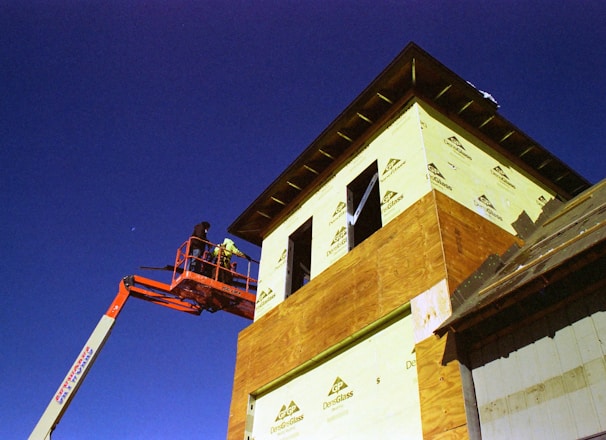
I am installing bamboo flooring in three of my new bathrooms with the current 1600 square foot addition I am doing to my house right now. Bamboo it very tough and quite beautiful too.

That’s all for now folks

For a comprehensive guide to bathroom remodeling Download Now

Cheers

Glenn

Share This Post

Post to Twitter Tweet This Post


Twitter links powered by Tweet This v1.7.2, a WordPress plugin for Twitter.